
Content marketing is the practice of creating and distributing genuinely useful, relevant content on a consistent basis, aimed at a clearly defined audience, with the goal of earning trust and eventually driving a profitable action, a sale, a signup, a subscription, rather than asking for that action directly through advertising or a sales pitch. That's the core of it, and it hasn't meaningfully changed in over a decade. What has changed, and what the rest of this piece is actually about, is how that value now reaches the person it's meant for.
Where the term actually came from
Content marketing as a named, formal discipline traces back to one person more directly than most marketing terms can. Joe Pulizzi started using the term in 2001 while working in custom media at Penton Media, a B2B publishing company, describing the space between advertising and editorial that his team was operating in but that nobody had a proper name for yet.
He left in 2007 to build what became the Content Marketing Institute, formally launched under that name in 2010, and ran the first Content Marketing World in Cleveland in 2011, hoping for around 150 attendees and getting 660 instead. It's grown into the field's largest annual event since, now drawing thousands (Content Marketing Institute).
How one term became an entire discipline
From a name for unnamed work to the field's largest annual conference, in a decade.
Pulizzi starts using "content marketing" at Penton Media
Leaves to start the company that will become CMI
Formally launches as the Content Marketing Institute
Content Marketing World: hoped for 150, drew 660
Content Marketing Institute; multiple independent accounts of the 2011 launch
CMI's own definition, refined over the years, describes content marketing as a strategic approach built around consistently creating and distributing content that's genuinely valuable and relevant to a specific, well-understood audience, with the underlying goal of driving profitable action over time rather than through a single transactional ask. That's a paraphrase rather than a direct quote, but the substance matches what most practitioners in the field still consider the working definition today.
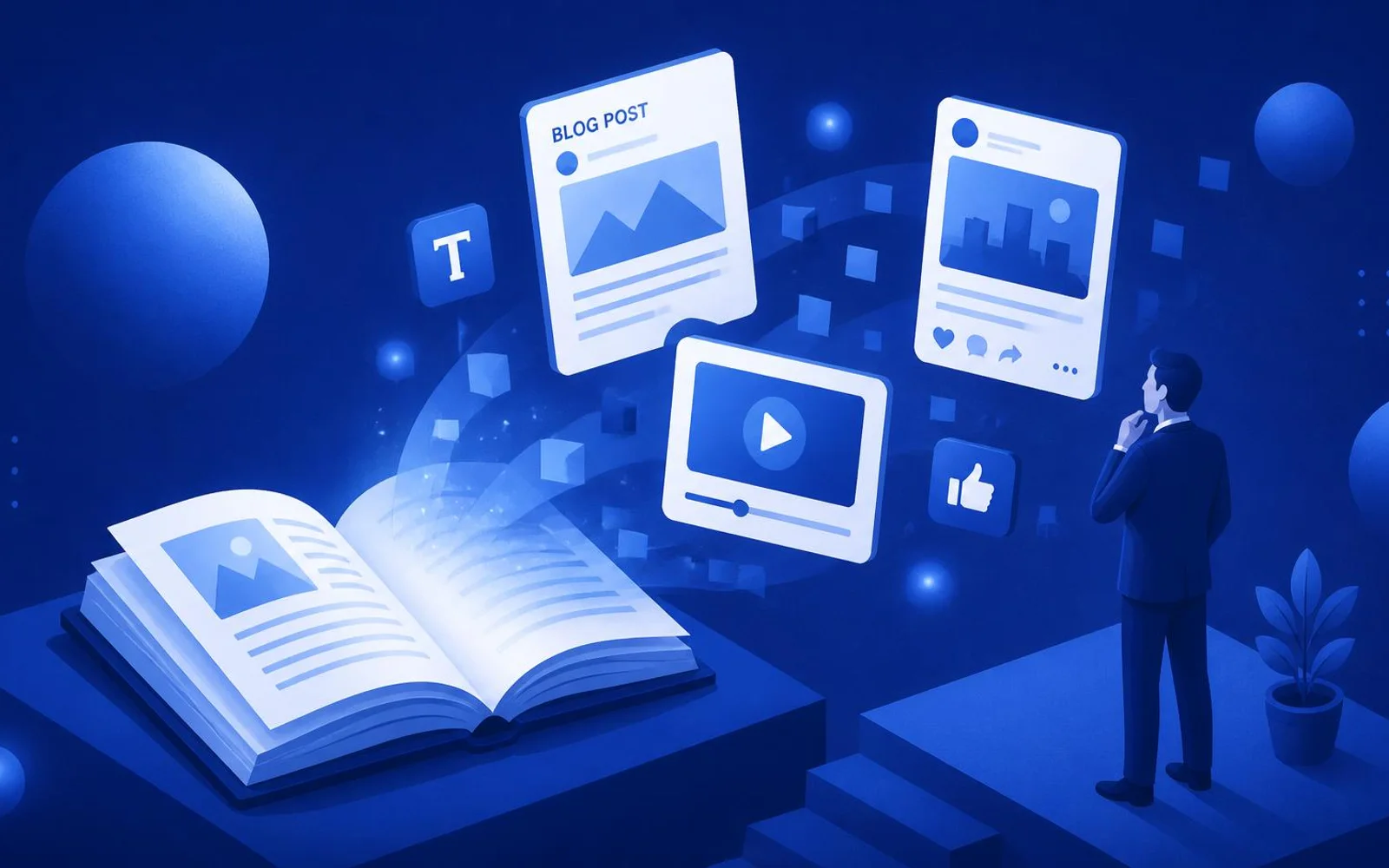
What's worth noticing about that definition is what it deliberately excludes. It's not advertising, because advertising interrupts and content marketing earns attention instead. It's not PR, because PR is primarily about managing a narrative through third parties, while content marketing publishes directly. It's not a synonym for blogging, even though a blog is often the most visible format it takes. Content marketing is the strategy underneath the format, not the format itself, and that distinction matters more now than it used to.
Why this definition is genuinely shifting, not just evolving
Here's where I want to be precise about what's actually changing, because it's not the definition itself. It's the mechanics underneath it, and the mechanics have shifted enough in the last two years that the practical meaning of "distributing content" now looks different than it did even five years ago.
For most of content marketing's history, distribution meant getting a piece of content in front of a human being who would click through, read it, and form an opinion based on that direct encounter. That's still true for a meaningful share of content, but it's no longer the whole picture.
SparkToro's research found 68.01% of US Google searches in the first four months of 2026 ended without a click to any website at all, up from 60.45% in 2024 (SparkToro). Worth noting honestly: the two figures come from different measurement panels, so they're closer than perfectly apples-to-apples, but the direction is unambiguous and it's not a small move.
Fewer searches end in a click every year
Share of US Google searches that end without visiting any website.
Datos panel data.
Similarweb panel data.
SparkToro, 2026
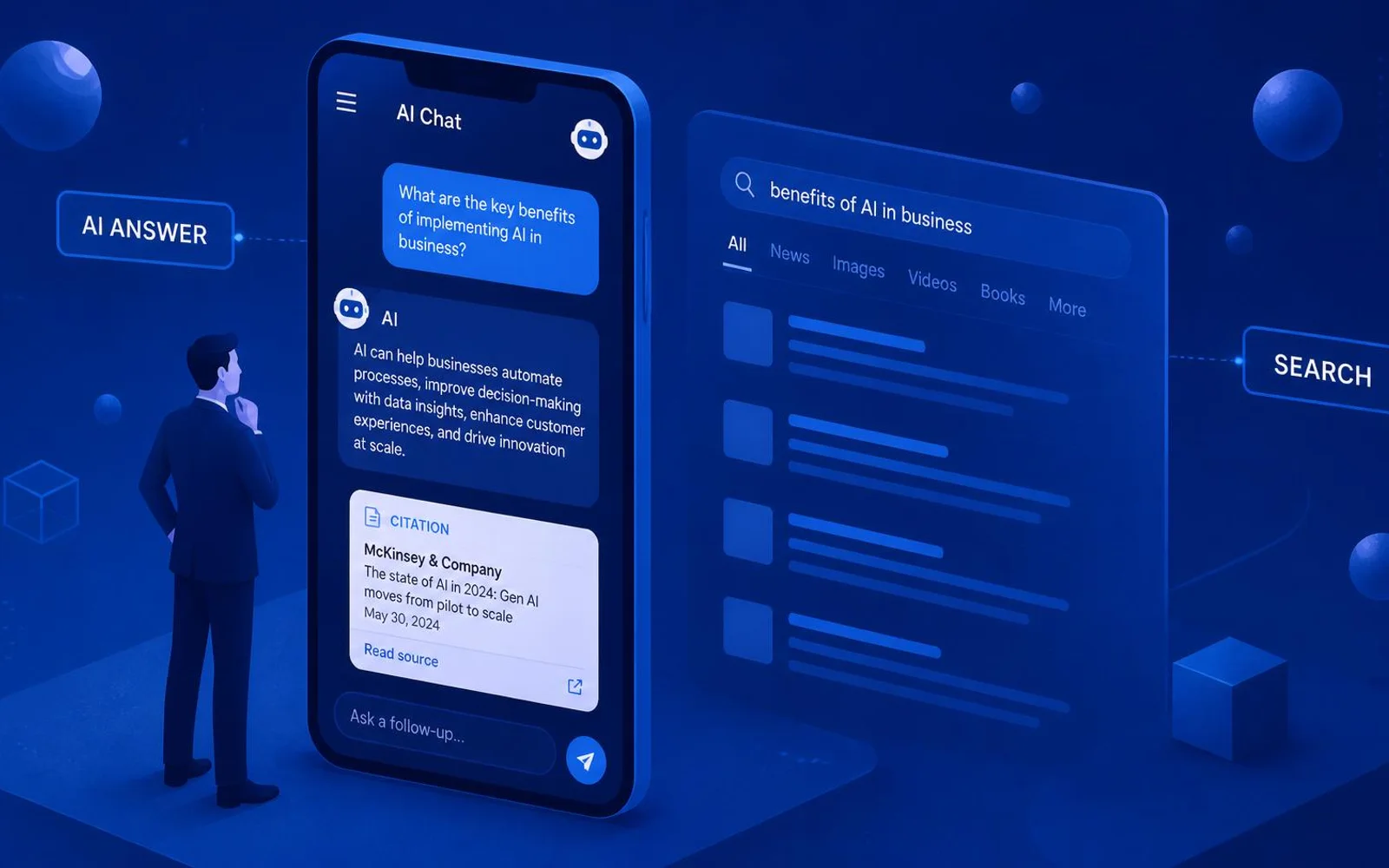
A growing share of what content marketing produces now gets consumed indirectly, summarized or cited inside an AI-generated answer, rather than read directly on the page it was published on. That's a real shift in what "distribution" and "reaching an audience" mean in practice, even though the underlying goal, earning trust through genuine value rather than buying attention through interruption, hasn't moved an inch. A definition written in 2001, or refined through the 2010s, described the goal accurately enough that it still holds. It just didn't anticipate a world where a meaningful share of that value gets delivered to a reader who never technically visits your site at all.
The practical difference this makes
If the philosophy hasn't changed but the mechanics have, here's what that actually changes about how content marketing gets built and measured now, compared to a decade ago.
What "distribution" means has expanded. It used to mean search rankings, social shares, and email lists. It now also means being cited or named inside an AI-generated answer, a channel that didn't meaningfully exist as a distribution mechanism until the last couple of years, and one that most content teams don't yet measure separately from organic search at all.
Structure now matters as much as substance. Content written to be read start to finish by a human and content written to be extracted and summarized by a system aren't identical anymore. A clear, direct answer near the top of a page, proper schema markup, and question-form headings weren't strictly necessary for a human reader a decade ago. They're increasingly necessary for a second, non-human reader now, one deciding whether to cite the page at all.
Measurement has gotten harder in a specific, honest way. A pageview used to be a reasonably reliable proxy for "this content reached someone." It's a less complete proxy now, since a citation inside an AI answer can deliver real value, brand awareness, trust, consideration, without ever registering as a visit in a standard analytics dashboard.
None of this changes what content marketing is for. It changes what building it well actually requires, and teams still operating entirely on a decade-old mental model of distribution are increasingly optimizing for a shrinking share of how content actually reaches people now. The applied version of this, architecture rather than a definition, is the natural next read if that's the gap you're trying to close.
Key takeaways
- Content marketing means creating and distributing genuinely valuable, relevant content consistently, for a clearly defined audience, aimed at earning trust that eventually drives a profitable action rather than asking for it directly.
- The term traces to Joe Pulizzi, who began using it in 2001, left his corporate role in 2007 to start what became the Content Marketing Institute in 2010, and launched Content Marketing World in 2011.
- The core definition hasn't meaningfully changed in over a decade. What's shifting is the mechanics of distribution, with a growing share of content now reaching people through AI-generated answers rather than a direct click.
- SparkToro's 2026 research found 68.01% of US Google searches now end without a click, up from 60.45% in 2024, meaning a meaningful share of content marketing's real reach now happens invisibly to standard analytics.
- Content built to be extracted and cited by an AI system requires structural discipline, clear answers, schema, question-form headings, that wasn't strictly necessary for a human-only audience a decade ago.
FAQ
What is the simplest definition of content marketing?
Creating and distributing genuinely useful, relevant content consistently for a specific audience, aimed at earning trust that eventually drives a business outcome, rather than asking for that outcome directly the way advertising does.
Who coined the term content marketing?
Joe Pulizzi began using the term in 2001 while working at Penton Media, a B2B publishing company. He left in 2007 to start the company that formally became the Content Marketing Institute in 2010, then launched Content Marketing World, the field's largest annual event, in 2011.
Is content marketing the same as blogging?
No. Blogging is one format content marketing often takes, but the strategy applies just as directly to video, original research, email newsletters, podcasts, and interactive tools. Content marketing is the underlying strategic approach, not a specific format.
How is content marketing different from advertising?
Advertising interrupts an audience to make a direct ask. Content marketing earns attention by providing genuine value first, with the business outcome arriving later, as a result of trust built over time rather than a single transactional message.
Why is the definition of content marketing changing now?
The core goal, earning trust through genuine value, hasn't changed. What's changing is how that value reaches an audience. A growing share of content is now consumed indirectly, cited or summarized inside an AI-generated answer, rather than read directly through a click, which changes what "distribution" and "reach" practically mean without changing the underlying strategy itself.
Sources
- SparkToro, In 2026, Less than One Third of Google Searches Still Send a Click
- Content Marketing Institute, The History of Content Marketing